

The Parc Sanitari, in tune with Justice to improve the prison model
- The minister and the Secretary of Penal Measures and Reintegration held a working meeting with the Parc’s management team, as the main provider of care for people deprived of liberty with mental health problems.
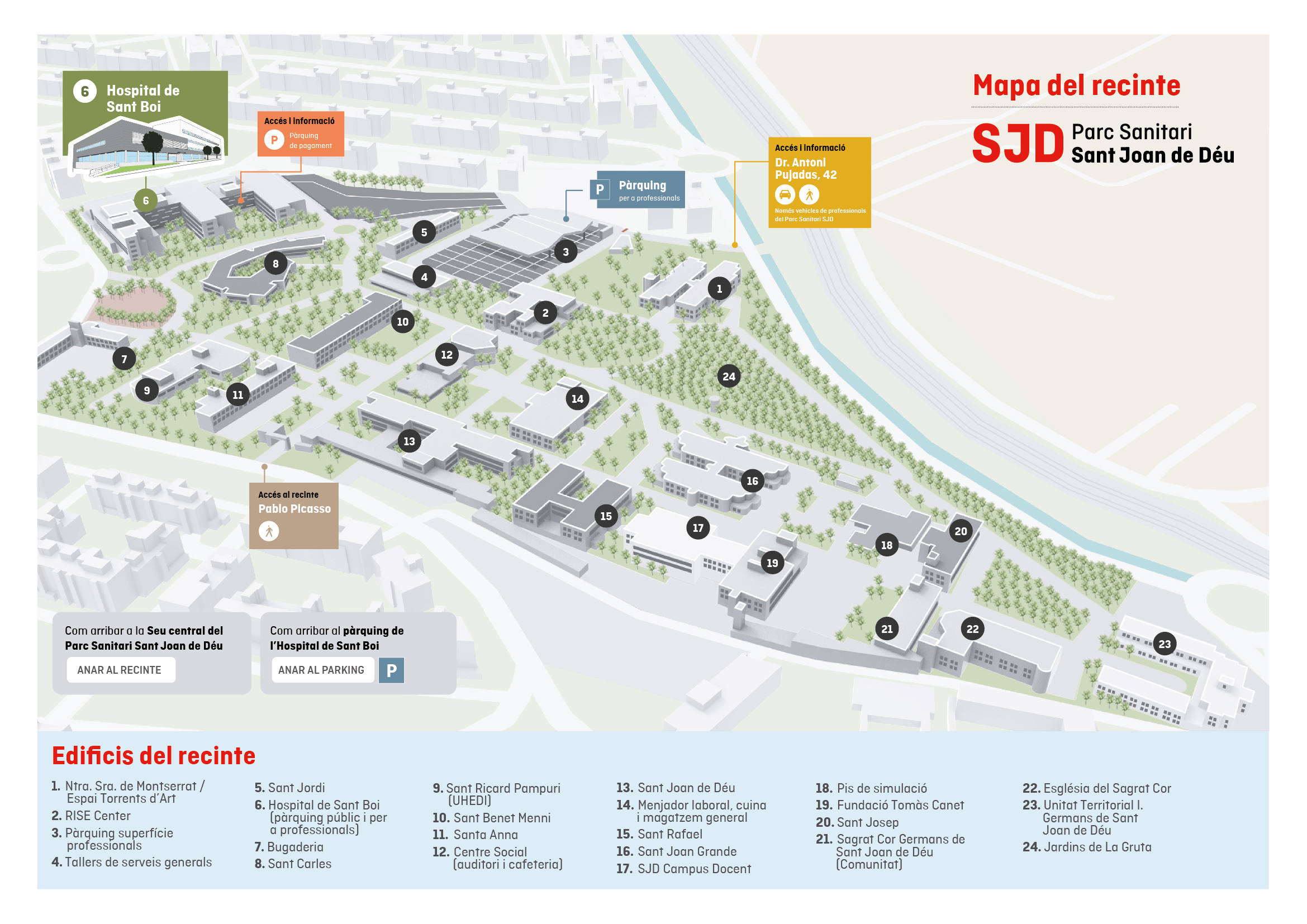
- They also toured the Specialised Hospitalisation Unit for People with Disabilities (UHEDI).
- The collaboration between the Departments of Health and Justice, with the participation of the Parc Sanitari Sant Joan de Déu (SJD), ensures a comprehensive care model within prisons and juvenile justice centres
The Minister of Justice and Democratic Quality, Ramon Espadaler i Parcerisas, visited the Parc Sanitari Sant Joan de Déu today and held a working meeting with the Parc Sanitari’s management team. Accompanied by the Secretary of Penal Measures and Reintegration, Elena Pérez, and the Director General of Community Penal Enforcement and Juvenile Justice, Jesús del Cacho, the minister met with the Managing Director of the Parc Sanitari SJD, Dr. Sebastià Santaeugènia; the Director of Economics and Finance at PSSJD, Marta Garcia; the Director of the Parc Sanitari SJD Mental Health Network, Antoni Serrano; and the Director of Nursing, Raquel Fabregat, among others.
In this meeting, the minister and his team learned about the mental health care model in prisons and juvenile justice centres, as well as the Parc Sanitari’s proposal to move toward a model more aligned with the one Sant Joan de Déu applies in the community. During the visit, the minister toured some areas of the Specialised Hospitalisation Unit for People with Disabilities (UHEDI).
The Parc Sanitari Model
The Parc Sanitari Sant Joan de Déu has been managing care for people deprived of liberty with mental health problems for over twenty years in the centres of CP Brians 1, CP Brians 2, CP Quatre Camins, CP Joves, and CP Dones, as well as in juvenile justice educational centres and through the Individual Mental Health Follow-Up Program in open centres under the Directorate General of Penitentiary Affairs.
It is a prison psychiatry model based on reintegration through the creation of life projects in the community. This model, a pioneer at the national level, addresses the mental health issues of inmates not only through hospitalisation but also by providing the most appropriate outpatient care to ensure continuity of treatment within the mental health network. The goal is to move away from a custodial and containment-oriented care model and promote comprehensive, individualised, proactive, and interactive care for the person being treated.
Agreement with Health
On 30 October, the Minister of Justice and Democratic Quality, Ramon Espadaler, and the Minister of Health, Olga Pané, signed a new coordination agreement between their departments to improve mental health care and addiction treatment for individuals in prisons and juvenile justice centres in Catalonia.
The agreement continues the work line started in 2017, when the first agreement was formalised to develop a comprehensive mental health and addictions care program in the context of penal enforcement. Since then, the collaboration between Health and Justice has made it possible to adapt the community-based healthcare model for mental health and addictions to the specific needs of people deprived of liberty.
Comprehensive and Equitable Healthcare
According to data from the Department of Health, incarcerated individuals have a prevalence of mental disorders seven times higher than the general population. Many of these cases are related to substance abuse, such as cannabis, cocaine, or heroin, and often involve chronic patients who require ongoing, multidisciplinary care. This reality highlights the need for a comprehensive approach that goes beyond isolated treatment, including prevention, rehabilitation, and follow-up in the open community.
The new agreement aims to ensure that incarcerated individuals receive a portfolio of healthcare services equivalent to that offered to the general population, recognising their right to comprehensive care. In addition, it proposes expanding mental health care beyond severe mental disorders, addressing the specific issues that affect the prison population and those in the juvenile justice system.