

The H-ICU diaries, a tool that transforms the intensive care experience
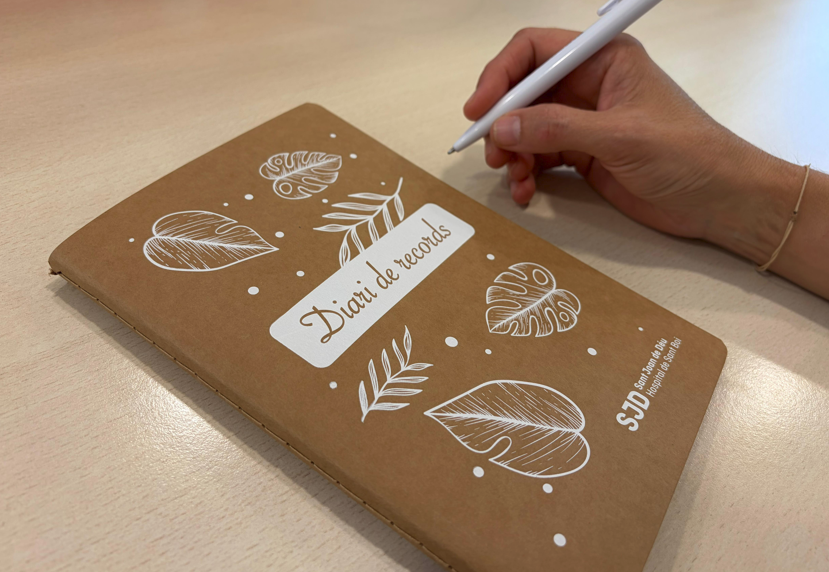
The project consists of adding blank diaries to the rooms of patients admitted to the intensive care unit so that relatives and professionals can write in them.
Sharing ideas and reflections during admission becomes a therapeutic tool that reinforces support at one of the most complex times in the hospitalisation process.
The goal is to promote a more humane, closer and person-centred way of caring.
At the H-ICU (Humanising the Intensive Care Unit) of SJD Sant Boi Hospital, the memory diaries have become much more than a collection of experiences. They are a support tool that helps patients and families make sense of a stage often marked by uncertainty, emotional intensity and vulnerability.
The project, promoted and maintained thanks to the daily involvement of all the professionals in the unit, allows the evolution of patients to be documented during their admission through messages, explanations and reflections written by relatives and members of the healthcare team.
Marta Roig Closa, a relative and first-person witness, highlights the therapeutic value this initiative has had during the process experienced: “From a human point of view, it is a very beautiful experience, despite the harshness and intensity of the situation. It is a great idea because it is very therapeutic for the family to be able to write down what we are experiencing, our feelings and our emotions.”
For professionals, the diaries are a particularly useful tool for helping patients understand their own healthcare process. Àngel Ochoa, an H-ICU nurse, explains that ‘memory diaries are especially useful in cases where the person has been sedated or unconscious for a period of time, because afterwards they allow them to better understand what has happened during their hospitalisation and this aids their recovery.”
A project that transforms the way of caring
The impact of the project goes beyond the benefit for patients and families. The introduction of diaries in the Intensive Care Unit has also reinforced team cohesion and the way of understanding care. Marta Herrero, a healthcare assistant (TCAI) in the unit, says that professionals strongly believe in this project because of all that it entails: “it generates affection and makes the relationship with the patient go beyond the professional relationship; they see us as the environment that cares for them and, in the end, almost as another family member.”
This commitment is reflected in the constant participation of the professionals, who feed the diary day after day with dedication and sensitivity. “It motivates me to continue growing both professionally and personally; it helps us to be a team and gives me a lot of satisfaction and a great desire to come to work’.
In a unit where particularly sensitive situations are experienced, the H-ICU diaries represent a different way of caring: closer, more humane and person-centred. An initiative that shows that the humanisation of care is not just a healthcare model, but a reality that is built every day thanks to the involvement of the professionals who promote it and make it possible.