

PlaTEA Conference: Combining Perspectives to Transform Care for Adults with Autism
Psychiatric comorbidities in adults with ASD, lack of specific training for professionals, the need for post-diagnostic support. These are the main challenges detected within the mental health network.
The co-design of projects with users, families, and professionals from social and health fields is crucial for effectively supporting adults…
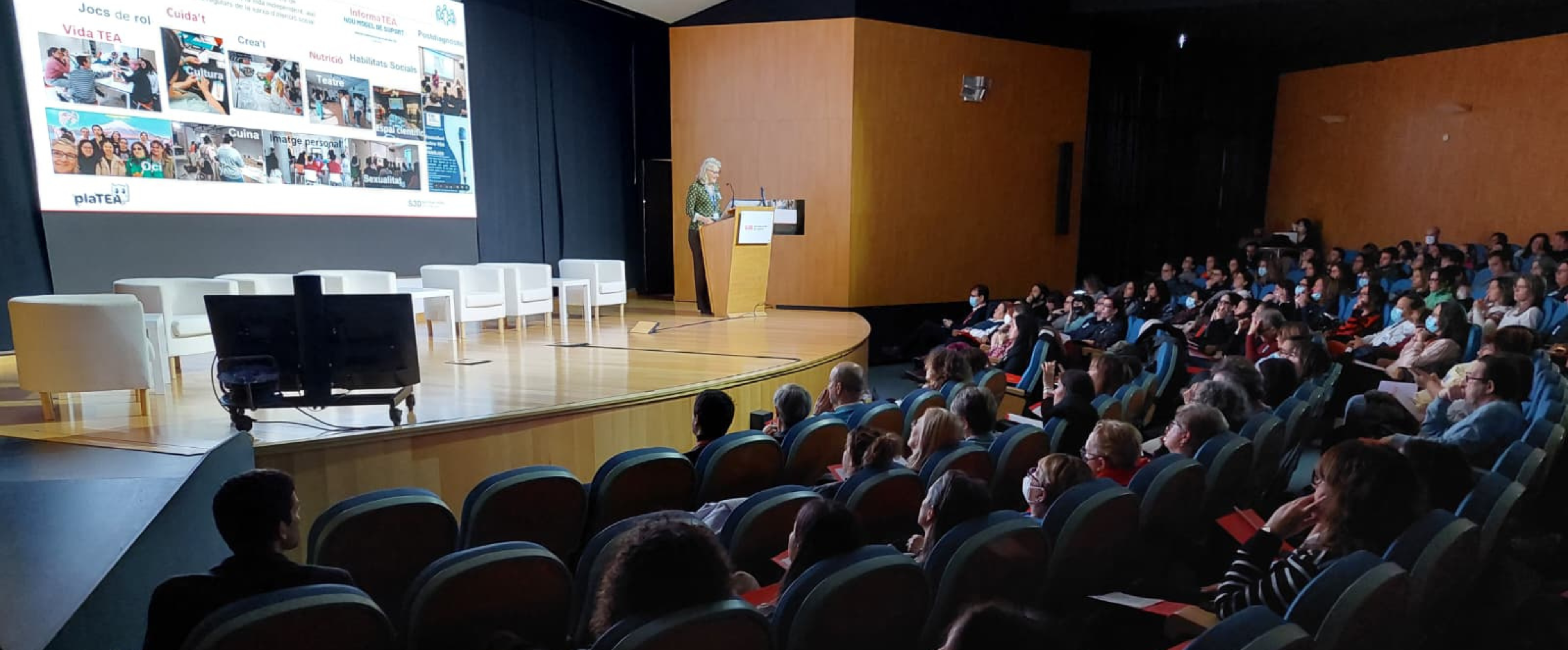
The co-design of projects with users, families, and professionals from social and health fields is crucial for effectively supporting adults with Autism Spectrum Disorder (ASD). Under this theme, Parc Sanitari Sant Joan de Déu today held the 1st PlaTEA Conference: where perspectives come together – a meeting point to give voice to autistic individuals, their families, and health and social professionals – with the goal of advancing toward more inclusive, integrated care with a social focus.
The conference is part of the project PlaTEA: Improving care for adults with autism”, led by Dr. Nuria Tous from Parc Sanitari SJD and funded by European Next Generation funds. The goal is clear: improve quality of life and social inclusion for adults with ASD through cross-sector coordination, co-creation, and active user participation – a structural strategy of the institution’s autism care program
The preliminary results of the qualitative study on the needs of adults with ASD within the mental health network confirm the need for appropriate therapeutic strategies, faster diagnoses, and better coordination between medical, social, and employment sectors. The conference also responded to the need to consolidate best practices, share results, and promote ongoing collaboration between mental health services, social services, and organisations.
Voices that inspire
The round table "Lived Experience, Shared Knowledge" highlighted the importance of listening to autistic people and their families. “PlaTEA has helped me understand myself and make peace with who I am,” User Mar Galiano, a participant in the project, movingly explained. From the professional side, occupational therapist José Durán shared key insights: “We’ve tried to create the most welcoming and autism-friendly space possible – a place where people feel at home.”
Entities such as Aprenem Autisme, New Life, Specialisterne, and AutisMind shared experiences showing that support tools are essential for ensuring full citizenship for autistic adults.
Looking to the future: research and training
Even though the European-funded project is ending, PlaTEA will continue evolving as a living lab, with activities that generate knowledge and help identify the most effective interventions. This approach is made possible through Somrise, Sant Joan de Déu’s translational and knowledge transfer project aimed at transforming mental health and addiction care. All research under Somrise involves people with lived experience from the very beginning, using co-creation processes to develop practical solutions for clinical care.
“We can only advance in knowledge through rigor, and only through knowledge can we reach the most appropriate solutions,” said Dr. Antoni Serrano, director of the Mental Health Network at Parc Sanitari SJD. He also recalled that for years, the mental health directorate has made "care for adults with Autism Spectrum Disorder (ASD)" a core institutional strategy.
A commitment to specialised care
Parc Sanitari SJD has a specialised program for adults with ASD without intellectual disability at the Numància Day Hospital, structured with a multidisciplinary team since 2024. These experiences form the foundation for continued innovation and person-centred responses. Currently, ASD affects 1.23 out of every 100 people in Catalonia, with projections expecting this to rise above 2% in the coming years due to improvements in detection.