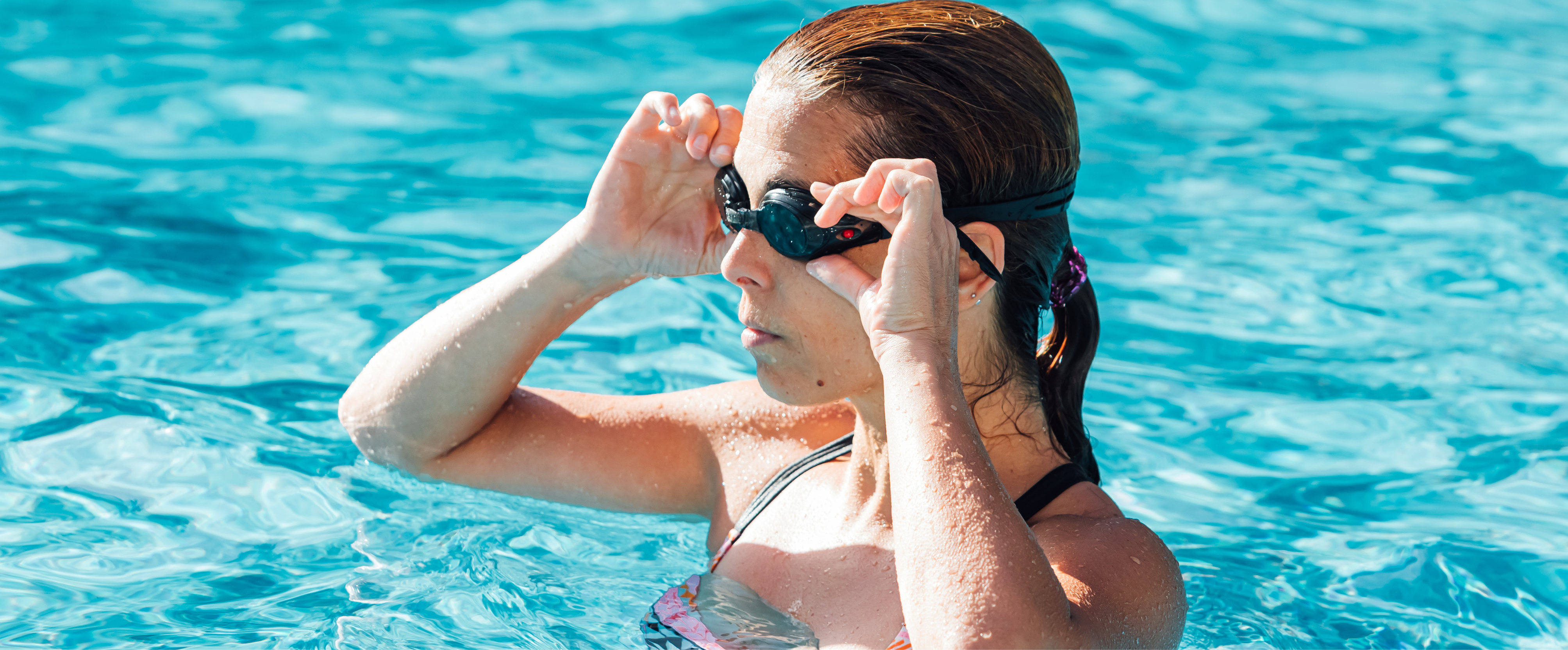


Swimming with monthly contact lenses increases the risk of contracting a severe eye infection
Experts recommend using daily contact lenses or prescription swimming goggles when practising water activities
The summer season is particularly delicate for the eyes due to high exposure to the sun’s rays, air conditioning, the wind, chlorine, and microorganisms present in the sea, river, or reservoirs
Summer is synonymous with holidays, the beach, the swimming pool, and outdoor activities. But it is also a time when we are more exposed to factors that can compromise eye health, and alter the health of the conjunctiva, cornea, lens, and retina, if good prevention is not practised. Ultraviolet radiation (UV), high temperatures, strong winds, swimming pool chlorine, sea salt, microorganisms in rivers or reservoirs, or allergens present in the environment can cause anything from mild irritations to more severe conditions.
The risk increases considerably in the case of contact lens wearers, who must be especially careful at this time of year, when contact with water is more frequent. The most severe cases treated at the Ophthalmology Department of Hospital Sant Joan de Déu Sant Boi in the summer are people who regularly wear contact lenses. “Swimming at the beach, in the swimming pool, doing sports activities in the river or diving into a reservoir poses a very high risk of infection”, states Dr Xavier Graell, head of the Ophthalmology Department at Hospital SJD Sant Boi. The most serious issue is contracting a corneal infection (keratitis) caused by the use of contact lenses contaminated by bacteria or, in the worst cases, amoebas. “Amoebas are parasites that can colonise contact lenses and penetrate your eye through a small wound in the cornea, which is quite common in lens wearers”, explains the doctor.
To avoid exposure, Dr Graell recommends not bathing with contact lenses, not even in the shower. When practising water activities, it is important to use prescription swimming goggles or daily disposable contact lenses, and throw them away once the water activity is finished. In any case, faced with any persistent eye symptom, one must go to Accident and Emergency. In these cases, an early diagnosis can be paramount to avoid severe sequelae such as permanent vision loss.
How to protect your eyes in summer
Among the general population, who do not wear glasses or contact lenses, the most common issues are irritations, especially due to visiting swimming pools or beaches. “In these cases, because many hours are spent outdoors, without protection when swimming, and in direct contact with irritants, such as chlorine and sea salt, or sand if the wind picks up”, the doctor states. The heat and air conditioning can also affect eyesight, as they dry out the environment and dehydrate the eyes, which can cause dry eyes.
Furthermore, throughout the year, but especially in summer, it is key to protect the eyes from the sun’s rays. It is necessary to wear a hat and sunglasses with lenses approved against ultraviolet rays. This eye protection must always be accompanied by protection for the skin on the face, with factor 50 sun cream, and without forgetting the eyelids, which can also be the site of skin cancer.