

What should you say to someone who is thinking about suicide?
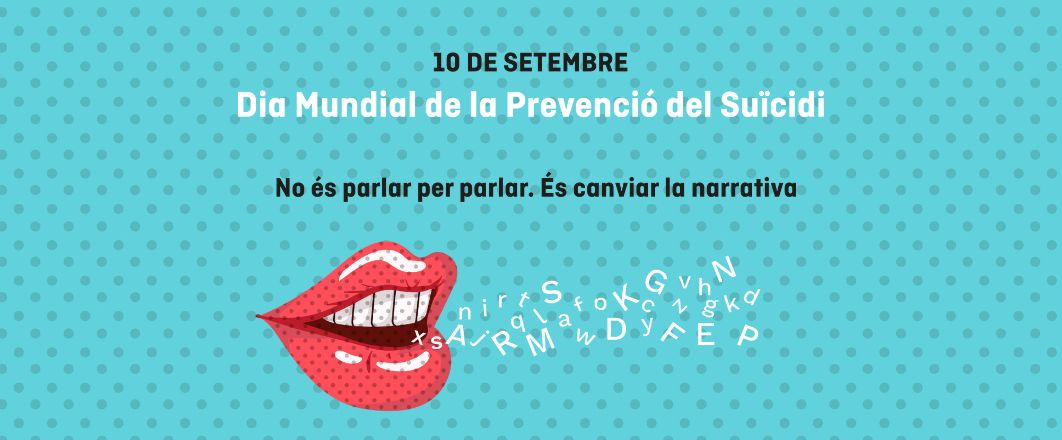
"It's not just talking for the sake of talking. It's about changing the narrative" is the slogan of the World Suicide Prevention Day campaign
Tips include listening, not judging, asking what they need, offering tangible support and referring them to specialised care and emergency helplines
Twelve per cent of visits to psychiatric emergencies at Parc Sanitari Sant Joan de Déu in 2024 came after a suicide attempt
People with suicidal thoughts are often afraid to talk about it while those around them are afraid to ask. In response to this situation, Parc Sanitari Sant Joan de Déu is running the campaign “It's not just talking for the sake of talking. It's about changing the narrative" with the goal of fostering responsible, empathetic and effective communication which helps prevent suicide in line with the WHO's “Changing the narrative about suicide” slogan.
10 September marks World Suicide Prevention Day, and we have known for years that talking about suicide saves lives. However, we need tools to be able to talk about it in a compassionate, safe and truly supportive way to a person who may be thinking about taking their own life so that we can all promote prevention. “If you talk about it, you're already halfway there," says Mario Vendrell, an activist with his own personal experience.
Talking can save lives, but it has to be done right
Thoughts of death or suicide can appear in times of intense suffering, despair, stress or mental health problems. When faced with a person expressing suicidal thoughts, it is essential to know what to do.
Dr Angelica Cuautle, head of emergency and psychiatric consultation at Parc Sanitari, says: “Finding ourselves in this situation can generate anxiety, sadness, guilt... Yet we are not responsible for what the other person thinks or does. What we can do is be there for them with empathy and support.” The idea is to have a conversation which can be a protective factor and thus help them to reconsider their decisions immediately.
It's common to feel unsure about what to do, what to say or how to help, or to think that "they'll have suicidal thoughts if I ask them" or "they'll get angry or feel worse". Yet the fact is that talking saves lives, and we can all help to prevent suicide. However, we need to talk about it properly, responsibly and using respectful language; "words can strengthen us, while silence can have the opposite effect".
What we can do when someone tells us they have thought about death or suicide:
Talking about suicide is extremely helpful, but it has to be done responsibly, offering help and encouraging people to seek professional support. Here are some tips from Parc Sanitari Sant Joan de Déu experts:
- Listen with empathy: Give the person space to express themselves, without judging or interrupting. Listen attentively, actively and empathetically. Empathising means trying to understand the situation from the person's point of view, even when we disagree, and helps validate their feelings.
- Avoid judgements or comments that downplay their distress: Comments such as "Don't say that, think about your family..." can make the person feel misunderstood and worse than they already feel. It also doesn't help to say things like "But why? everything's going okay, you've got your whole life ahead of you…”
- Offer tangible help. A person in this situation will often find it hard to ask for help or say how we can help them, so it is a good idea to tell them that we want to help them and offer specific forms of support which we can deliver. Suggestions such as “Would you like to talk every Monday?” or "Let's meet up on that day" or "If you can't sleep, call me…” can be very useful.
- Encourage them to seek professional help. There are specialised helplines (061 and 024) which are open 24/7. Steer clear of unverified digital tools or using artificial intelligence.
- Foster a safe and welcoming environment where the person feels protected, understood and supported while also being respected and autonomous.
- Maintain frequent contact and ask how they are and how we can help them.
What should be avoided?:
- Judging or showing disbelief.
- Using ambiguous language, as it can generate equally ambiguous responses.
- Don't say things like “I understand what you're going through” if our thoughts and feelings are actually different.
- Discouraging prematurely or trying to “fix” the situation. Sometimes we say things or give advice that are meant to change the way someone thinks, but if we do this too soon, it can stop the person from opening up and talking. The person may feel that what is happening to them is being downplayed.
- Keeping it a secret if there is a risk of suicide.
- Taking responsibility for what the other person thinks or feels. Trying to fix problems can generate despair in the person, and despair is associated with suicidal thoughts.
“I'd like to understand the situation you're in, to be able to empathise with your pain [...] so that we can find resources to help you feel better,” is how Mario Vendrell describes an appropriate way to talk to someone who has expressed suicidal thoughts.
Suicide: a public health problem which can be prevented with support and information
In 2024, 674 people were treated in the psychiatric emergency department at Parc Sanitari Sant Joan de Déu after attempting suicide, accounting for 12% of all visits. Fifty-eight per cent were women. Out of every 30 people with suicidal thoughts, one attempts it. These data demonstrate the need to step up detection and support in times of crisis.
In Spain in 2023, 4,116 people died by suicide (an average of 11 suicides per day). This means a 2.6% decrease compared to 2022. Although the figures are still very high, this decrease shows that suicide prevention is possible and deaths can be avoided. We can change the narrative and generate hope.
Based on current figures, the prevalence of suicidal thoughts throughout life in Spain is 4.4-7.8% and it is estimated that between 1.5-1.8% of people will attempt suicide.
The WHO says suicide accounts for one in every hundred deaths worldwide, and warns about the lack of resources, professionals and funding to deal with mental health issues while urging governments around the world to come up with a better global response to mental health disorders.
A recent study by Rey Juan Carlos University and the Open University of Catalonia (UOC) reveals worrying data among adolescents: 15.7% have attempted suicide, 19.8% have considered it and 29.3% have engaged in self-harming behaviours in the last year.
Suicide prevention helplines and websites: 061 and 024
In Catalonia, the 061 and 024 helplines are available 24/7 providing specialised assistance in suicide prevention for people with suicidal thoughts and also for those close to them.
- 061 Salut Respon is a professional helpline which can trigger the Suicide Risk Code. This is a team made up of mental health specialists in nursing, psychology and psychiatry.
- 024 is the Ministry of Health's suicidal behaviour helpline.
If the risk is imminent, call 112.
You can find reliable information and contact numbers on the Sant Joan de Déu SOM Salut Mental 360 website.