

A study by the Parc Sanitari SJD links the slowness associated with Parkinson's to changes in the brain
The research findings show that difficulty with movement is linked to changes in the gyrification of the cortex
In Catalonia, there are over 30,000 people diagnosed with Parkinson’s who suffer from bradykinesia, one of the most debilitating symptoms of this neurodegenerative disease
World Parkinson’s Day is observed on 11 April to raise public awareness and draw attention to people living with the disease and their families
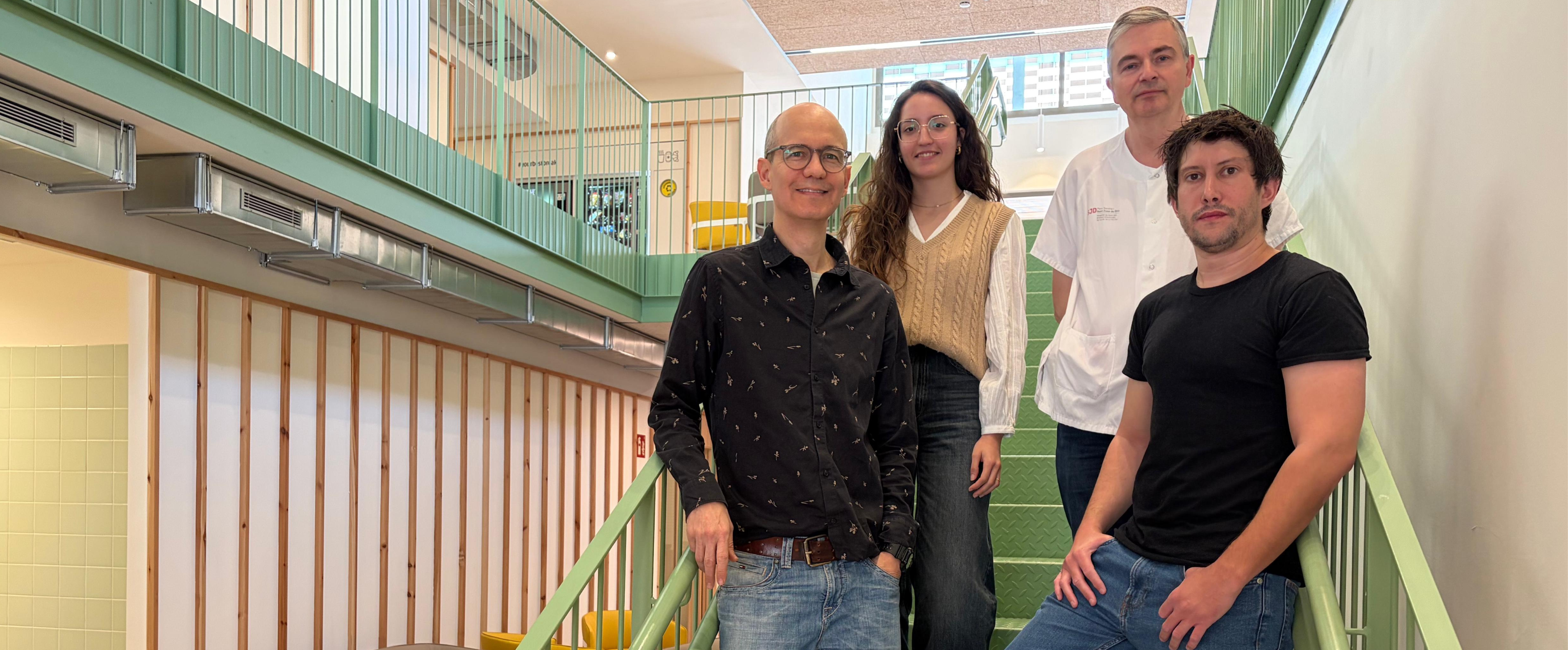
We are getting closer to understanding the motor slowness and impairments associated with Parkinson's disease. The study Cortical gyrification deficits in early-stage Parkinson's disease: the importance of bradykinesia, led by investigators Dr Christian Stephan-Otto and Dr Christian Núñez, neurologist Dr Antoni Callén and investigator Gemma Colomé, has revealed a direct link between the characteristic movement difficulties of the disease and structural alterations in the brain. Specifically, it is a loss of gyrification in the cerebral cortex.
The study’s results suggest that the reduction in cortical gyrification affects regions which are critical in processing sensory information. The investigators believe this alteration might be tied to slowing of motor fluency.
“These findings suggest that slowness and difficulty in moving may be associated with a deficit in brain processing,” says the research team. Furthermore, in the healthcare setting “this helps us to understand the frustration and extra effort patients have to put into everyday tasks which used to come naturally to them,” points out Dr Antoni Callén.
The study is part of the doctoral thesis of Dr Callén, head of the Neurology Department at Hospital SJD Sant Boi, in conjunction with Gemma Colomé, a researcher and member of the Innovation team at Parc Sanitari SJD, under the supervision of investigators Dr Christian Núñez, from the IDIBAPS Multimodal Neuroimaging in High Risk and Early Psychosis group, and Dr Christian Stephan-Otto, from the Pediatric Computational Imaging Center (PeCIC) at Institut de Recerca Sant Joan de Déu (IRSJD).
This is an inter-institutional project which brings together clinical expertise and analytical capabilities in brain imaging. The investigation harnessed cross-disciplinary collaboration to approach the topic from a complementary, meticulously structured standpoint integrating clinical, technological and methodological knowledge. “The combination of clinical insight and analytical capability allows us to advance our understanding of Parkinson's disease and seek useful answers for patients, healthcare practitioners and researchers in neurodegenerative diseases,” argue the study's authors.
Faster diagnoses and more precise medical support
The results of this study point to new prospects for the future: MRI scans could become a key test for spotting changes in the cortex associated with bradykinesia. This would enable faster diagnoses, more precise medical support and a more accurate assessment of the impact of new therapies.
This new approach paves the way to transforming the clinical approach to Parkinson's and adding to our knowledge of the disease.
Parkinson's disease affects more than eight million people worldwide. In Spain, there are more than 200,000 people living with the condition, and around 10,000 new cases are reported each year. In Catalonia, over 30,000 people are diagnosed with this neurodegenerative disease. Its main symptoms include bradykinesia, defined as slowness of movement. Although less well known than the typical Parkinson’s tremor, it is one of the most debilitating symptoms and generates the most complaints among people living with the disease.
A prevalent neurodegenerative disease with a significant impact on healthcare
Parkinson's disease is a degenerative disorder of the central nervous system whose main symptoms are resting tremor (in the hands, arms, legs or jaw), slowness of movement, rigidity (stiffness of limbs and trunk) and postural instability. There is a wide variation in its progression; it can follow a fairly benign course or become extremely disabling in the short to medium term.
It is the second most common neurodegenerative disorder. It is slightly more prevalent among men with an average age of 78. Figures from the Spanish Society of Neurology show that Parkinson’s is not a disease exclusive to older people as 15% of cases are diagnosed in people under the age of 50.
It is also a disease with a significant impact on healthcare. Almost half of people diagnosed are at risk of serious complications, which increases the likelihood of hospitalisation.
Study Cortical gyrification deficits in early-stage Parkinson's disease: the importance of bradykinesia (DOI 10.1093/braincomms/fcag094)