

80% of treated patients are discharged in less than 12 months
Early care to prevent chronicity and improve quality of life for chronic patients—the unit's main objectives.
Since opening, the Unit has treated 165 people. 130 patients have already improved or recovered
In Catalonia, approximately 6% of the adult population suffers from moderate or severe depression
Globally, 37% of people diagnosed with major depressive disorder (around 100 million) do not improve with existing therapies
The Resistant Depression Unit of Parc Sanitari Sant Joan de Déu consolidates its work with encouraging results: 80% of treated patients are discharged in less than 12 months. Since opening in April 2025, the Resistant Depression Unit has treated 165 people (102 in 2025 alone), with an average stay of six months. 130 patients have already improved or recovered.
Why does this matter?
In Catalonia, approximately 6% of the adult population suffers from moderate or severe depression (ESCA 2024 data), with a significant increase following the pandemic. Globally, 37% of people diagnosed with major depressive disorder (around 100 million) do not improve with existing therapies, highlighting the need for specialized units.
Innovative treatments with real impact
The Treatment-Resistant Depression Unit at Parc Sanitari SJD offers advanced therapeutic options aimed at stimulating brain neuroplasticity. These are applied in safe clinical settings under specialised supervision:
• Intranasal Esketamine
Administered in controlled sessions, it acts quickly on brain circuits involved in depression It is especially useful in cases where conventional antidepressant medications have failed. Patients receiving these treatments achieve the greatest neuroplasticity gains, especially when combined with psychotherapy. It has shown a positive response in 82% of patients.
• Electroconvulsive Therapy (ECT): A technique with decades of scientific evidence, indicated for severe and resistant depression. Performed under anesthesia and medical monitoring, it delivers highly significant symptom reduction results, between 85–90%.
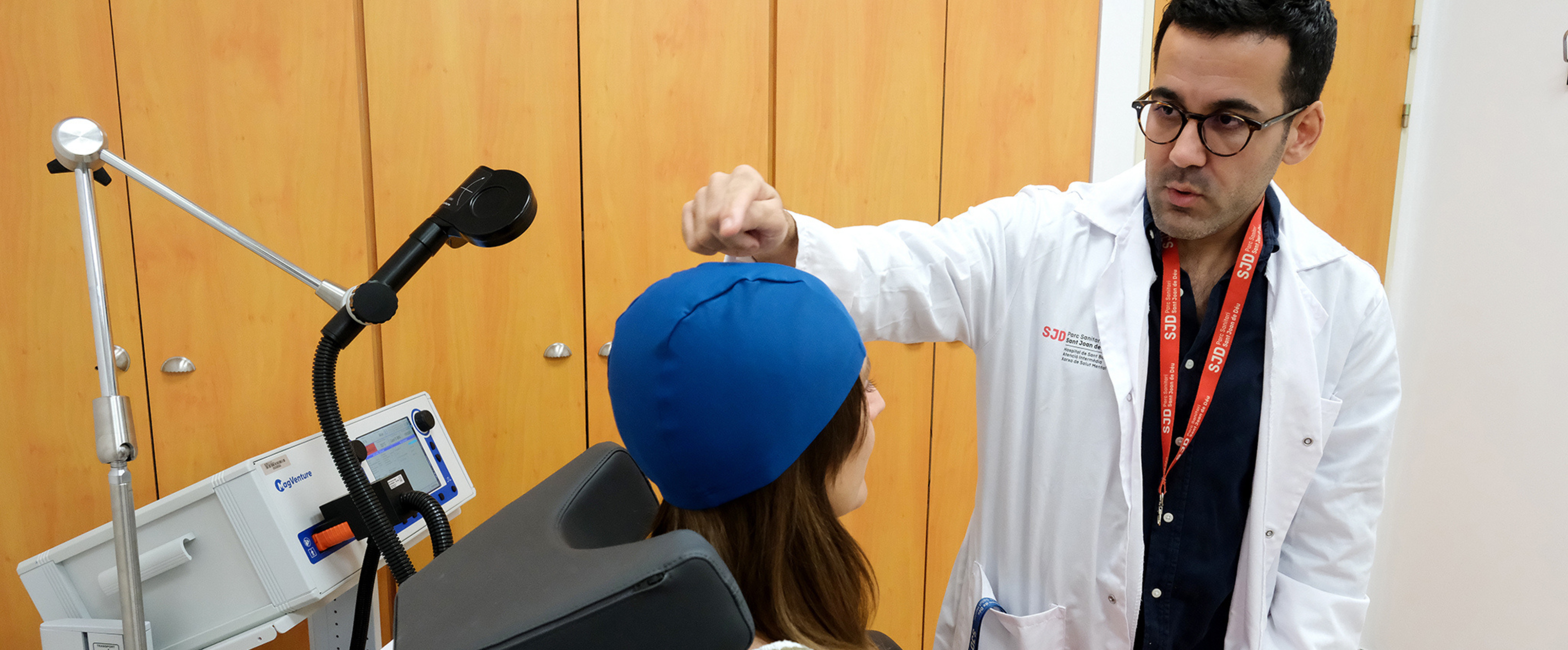
• Transcranial Magnetic Stimulation (TMS): A non-invasive procedure that uses magnetic fields to stimulate specific areas of the brain related to mood. It has shown a remission rate of 35–40% without serious side effects.
• Research with psychedelics (research in a clinical setting): These experimental treatments aim to unlock rigid mental patterns and facilitate psychotherapy in patients with chronic depression. The ANIMA research group is running several clinical trials with psilocybin at different stages of investigation.
• Psychotherapy and comprehensive approach: nursing, psychology, social work and family support.
These figures show a significant improvement in quality of life for those cared for. Younger patients or those with a shorter duration of the illness tend to respond more quickly to treatment.
Unit objectives: early intervention and reversing chronicity
Depression is a complex, heterogeneous disorder that often involves comorbidities, becomes chronic, and resists standard treatments. Parc Sanitari SJD established the unit to address this reality and improve the quality of life for chronic patients. In parallel, the unit also works on earlier diagnosis to detect cases from the outset, intervene sooner, and prevent them from becoming chronic.
“A unit was needed that would confirm the diagnosis and offer an individualised plan with innovative treatments and psychotherapy. We want to avoid chronicity and improve people's quality of life.”, explains Dr. Salvatore Aguilar, head of the Resistant Depression Unit at Parc Sanitari Sant Joan de Déu.
Another key function of the unit is to address the various factors that cause or worsen depression. “The mechanism of resistance is multifactorial, and we must be able to address all causes from the same facility.”, notes Dr. Salvatore Aguilar, head of the unit. The treatments not only reduce symptoms but also stimulate brain neuroplasticity, improving neuronal connectivity and opening a window of opportunity for psychological and social rehabilitation. “We have seen cases where, after months of treatment, patients have regained functionality and even returned to work.”, adds Aguilar.
Improving different aspects of a person’s life – such as eating healthily, sleeping well, exercising, and managing stress – interacts positively and reinforces recovery. Joining a gym or attending Community Rehabilitation Services alongside treatment ultimately leads to improvement in depressive symptoms. It is not just about reducing symptoms; the goal is to enhance overall functionality. Joining a gym or attending Community Rehabilitation Services alongside treatment ultimately leads to improvement in depressive symptoms. An integral approach is essential, involving teamwork across disciplines such as nursing, psychology, social work, family support, and community resources.
First-person testimonies:
“After many years without improvement, I now feel more functional, this treatment has given me hope. Suddenly, there’s a day you wake up feeling the sun on your face. I’m about to go back to work,” says Joaquín Gómez, 55, a patient at the Parc Sanitari SJD Resistant Depression Unit.
“I am no longer the person I was. I overcame it with treatment and wanted to start living again." “It takes a lot of support and affection. If you find the right person, you can get out of it; you can move forward,” explains Isabel Rodríguez, also a user of the Resistant Depression Unit.
The treatment selection is a personalised process based on scientific evidence.. The unit’s professionals assess each patient’s clinical characteristics and explain all possible scenarios, taking into account factors such as the presence of psychotic symptoms, psychomotor retardation, comorbidities, and contraindications. It follows a shared decision-making model, where the patient – supported by family – chooses their preferred option from the specialists’ proposals, ranging from least to most invasive. esketamine, Transcranial Magnetic Stimulation (TMS) and Electroconvulsive Therapy (ECT). This approach ensures treatment tailored to each case while respecting individual preferences.
Outlook
Challenges for 2026 include:
• Treating a higher volume of patients.
• Developing combined protocols (e.g., esketamine + ECT, TMS + ECT).
• Advancing research in predictive psychiatry.
• Incorporating new treatments such as tDCS (Transcranial Direct Current Stimulation) and, in collaboration with other centers, Deep Brain Stimulation (DBS).
Context and awareness
Treatment-Resistant Depression is depression that has not responded to at least one course of pharmacotherapy and one of psychotherapy, or in which more than two previous antidepressant medications have failed when tested at adequate doses and for sufficient duration. It is estimated that 35-37% of depression cases are treatment-resistant. This affects thousands of people and ranking as one of the leading causes of disability worldwide. This highlights the need for specialised units like the one at Parc Sanitari SJD.
With this unit, Parc Sanitari Sant Joan de Déu reaffirms its commitment to innovation in mental health and the fight against stigma.