

Experts urge young people to regain hope in the future
The 20th Parc Sanitari SJD Spiritual and Religious Care Service Conference addressed the current suffering of young people with a special focus on mental health, which is getting worse at increasingly younger ages
Job insecurity, delays in leaving home and the impact of social media and addiction are the main problems facing the younger generations
Young people between the ages of 18 and 24 shared their views and emphasised the importance of being heard and building networks to maintain hope for the future
Young people need to be listened to, supported, brought together in community and encouraged to engage in face-to-face conversations to gain the strength needed to turn the situation and their future around. This was the main conclusion of the 20th Spiritual and Religious Care Service (SAER) Conference, held today at Parc Sanitari Sant Joan de Déu under the tagline Youth in search of meaning: from suffering to active hope.
Economic and environmental crises, coupled with the fact that this is a generation which has experienced a pandemic, have led to a social landscape in which young people constantly question their place in the world and feel hopeless about the future. Epidemiological data warn that the younger generations are profoundly affected by the challenges of a time of great change, which makes it harder for them to join the workforce, delays their independence and the start of their adult lives, and has a particular impact on their mental health, which is becoming apparent at increasingly younger ages.
“Expectations for the new generations are changing, and various educational services are asking us and other organisations working in mental health for support in addressing their distress,” said Dr Sebastià Santaeugènia, managing director at Parc Sanitari SJD.
What are young people worried about?
During the opening session, Fernando Vidal, a sociologist and researcher at the University Institute of the Family, mentioned four areas of major concern among young people: job insecurity, with 46.4% of young people in precarious, low-paid jobs; problems in starting their adult lives, with young people in Spain not leaving home until they are 30; mental health, where 62% of young Spaniards have anxiety, 42% have trouble sleeping and there is a high incidence of self-harm and suicidal thoughts; and the serious impact of social media, screen use (with an average of four hours of exposure per day), and regular viewing of pornography before adolescence. “Young people are the main force for transformation in society," noted Vidal. "If there's a time to act, it's now."
Based on the figures presented at the opening session, the panel discussion on Multifactorial Discomfort, led by Professor of Biological Anthropology Ramon Maria Nogués, philologist Albert Soler and psychologist Francisco Villar, unpacked and identified four reasons that may lead to this discomfort. This panel talked about the way modern European societies today fail to provide values; how technology has hijacked the inner lives of young people, who flee from loneliness, and the need to tend to the inner world of younger generations; the lack of bonding groups, which are crucial from an anthropological standpoint; and the rise of eco-anxiety among the younger generations.
Professor Daniele Bruzzone, Chair of General and Social Pedagogy and member of the Viktor Frankl Institute board, spoke about hope. For Bruzzone, hope is a fundamental pillar of education from a phenomenological and existential perspective, influenced by Viktor Frankl’s logotherapy. According to Frankl, the primary human motivation is finding meaning in life, even in suffering.
Young people's experiences; shared vision
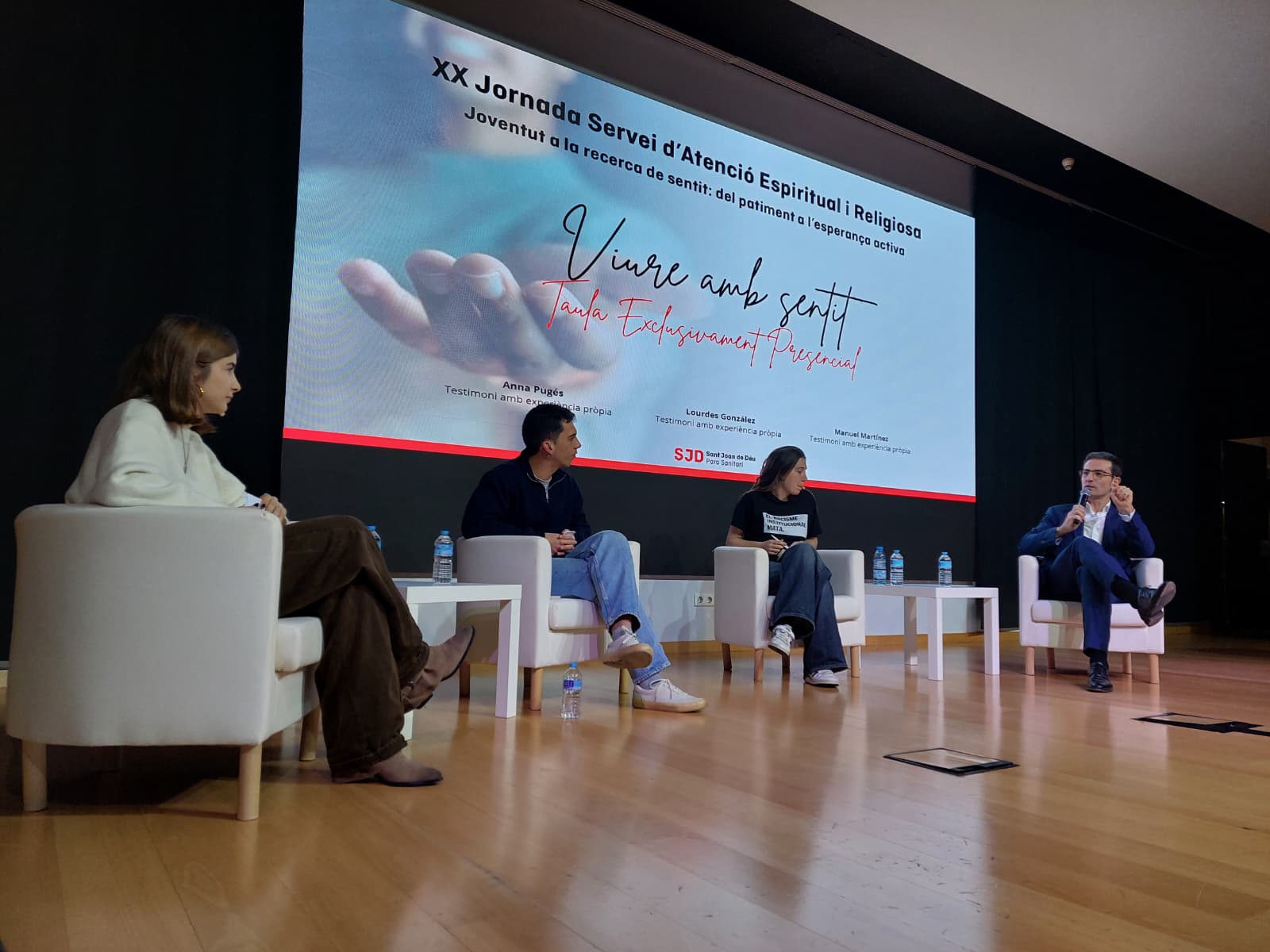
The Living with Meaning panel brought together three young people of similar ages who spoke from personal experience: they discussed the pressure they feel as a generation, the unwanted loneliness they endure; the high expectations of life generated by social media as if “real life weren't enough” and how this impacts their mental health; and the need to find trusted people they can share this discomfort with. "We are not a 'glass generation', but now we can name the discomfort we feel and express it, and we need to have a voice and be heard," they argued.
SAER has organised this 20th annual conference looking at the suffering of young people with the aim of identifying a significant correlation between spirituality and health while also enhancing and fostering support which is more appropriate and respectful of young people's needs and sensitivities.