

Making the invisible visible: keys to understanding autism in adulthood
Autism can go unnoticed for years into adulthood, especially in women, with a direct impact on mental health and quality of life.
Parc Sanitari SJD is driving specialized care and projects like PlaTEA to move towards more inclusive models based on knowledge and co-creation.
We are sharing 10 key ideas to improve understanding and care for adults with autism spectrum disorder (ASD)
Autism in adults continues to be an often invisible reality. Although autism spectrum disorder (ASD) is present from birth, it is not always detected in childhood and can go unnoticed for years, especially in women or in people with social camouflaging strategies. This invisibility has direct consequences on mental health, access to appropriate supports, and quality of life.
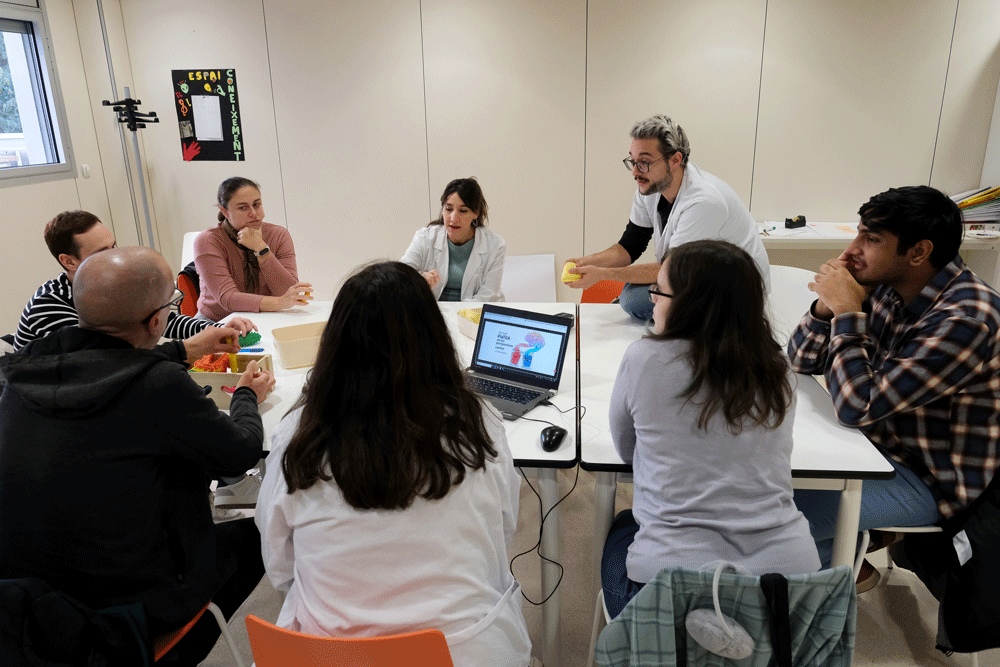
At Parc Sanitari Sant Joan de Déu, we have been working for years to make this reality visible, generate rigorous knowledge, and drive specialized care for adults with autism from a clinical, social, and community perspective. The Unit for Care of Adults with ASD at Parc Sanitari SJD, with projects such as PlaTEA, responds to this institutional commitment to support people throughout their entire life cycle.
In the framework of the World Autism Awareness Day, and with the aim of contributing to better social and professional understanding of autism in adulthood, we share a decalogue of 10 key ideas. These help break myths, make often-ignored realities visible, and reinforce the need to adapt environments and supports.
10 Key Ideas for Understanding Autism in Adults
- Autistic Women: Underdiagnosis and Gender Bias. Many women with ASD receive late or incorrect diagnoses. Clinical criteria have historically been based on male models and often fail to account for social camouflaging – a strategy of imitating neurotypical behaviours in order to go unnoticed.
- More Diagnoses, Better Perspective: the increase in women identified within the spectrum reflects an improvement in clinical criteria and sensitivity. It’s not that autism is new, but rather that we are learning to see it better.
- It Is Not a Disease: Autism is not a pathology that can be cured. It is a neurodevelopmental condition that involves a different way of perceiving, processing, and relating to the world.
- A Diverse Spectrum: there is no single profile; each person presents different strengths, challenges, and support needs.
- We Are Not Few: we are part of the world: Autism affects approximately 1% to 2% of the population. It is a reality present in the community that requires structural and inclusive responses.
- Frequent Anxiety: more than half of autistic people have associated anxiety disorders. Sensory overload, unpredictability, and social demands can be key factors.
- Late Diagnosis in Adults: Many adults reach a diagnosis late in life or come to it through self-diagnosis processes validated in professional settings. This can help give meaning to previous life experiences.
- Sensory Differences: Sensitivity to sounds, lights, or textures can have a significant impact on daily life, the workplace, and community participation. Adapting environments is key to well-being.
- Common Comorbidities: ASD can coexist with ADHD, depression, or other mental health disorders. The variability is very high and requires an integral and coordinated approach.
- Neurodiversity: autism is part of human neurodiversity. It is not a reality that should be eliminated, but rather one to be understood, respected, and taken into account when designing services, environments, and supports.
Combining Perspectives to Transform Care
At Parc Sanitari Sant Joan de Déu, we maintain that understanding autism in adulthood means listening to people with lived experience, training professionals, and adapting environments. Only in this way is it possible to advance towards fairer, more inclusive, effective, and respectful models of care that honour diversity. The PlaTEA project is an example of this: an initiative based on co-creation, coordination between mental health services, social services, and organizations, and a strong commitment to the autonomy, accessibility, and social inclusion of adults with ASD.
Making the invisible visible is a collective responsibility to guarantee rights, reduce stigma, and improve the quality of life of adults with ASD.
You will find extended information about Autism Spectrum Disorder on the Sant Joan de Déu SOM Salut Mental 360 platform.