

We’re adding an innovative wound care therapy to specialized surgery for complex wounds
Coordinated efforts between specialists from several disciplines have led to the full recovery of the first patient treated with Autologous Cytokine-Rich Serum, an innovative therapy which supplements surgery
The patient, David Moreno, was under hospital follow-up for a year until he made a full recovery and was able to resume doing sport
In pressure injuries, prevention is crucial to eliminating wounds which in most cases are avoidable
The multidisciplinary approach, involving advanced practice nurses and orthopaedic surgeons specialising in microsurgery and reconstructive surgery, has been crucial to the successful treatment of one of the most serious cases seen by the Complex Wound Unit at Parc Sanitari Sant Joan de Deu.
This is the case of David Moreno, who came to Hospital SJD Sant Boi due to a wound with bone involvement. This injury and those that followed were so severe that they required several surgical procedures, supplemented by highly specialised nursing care aimed at preventing complications, managing pain and optimising healing. “This model of collaboration between different specialities was instrumental in restoring David’s functionality and ensuring a safe and gradual recovery,” argues Pere Coca, a specialist nurse and member of the Complex Wounds Unit at Parc Sanitari SJD.
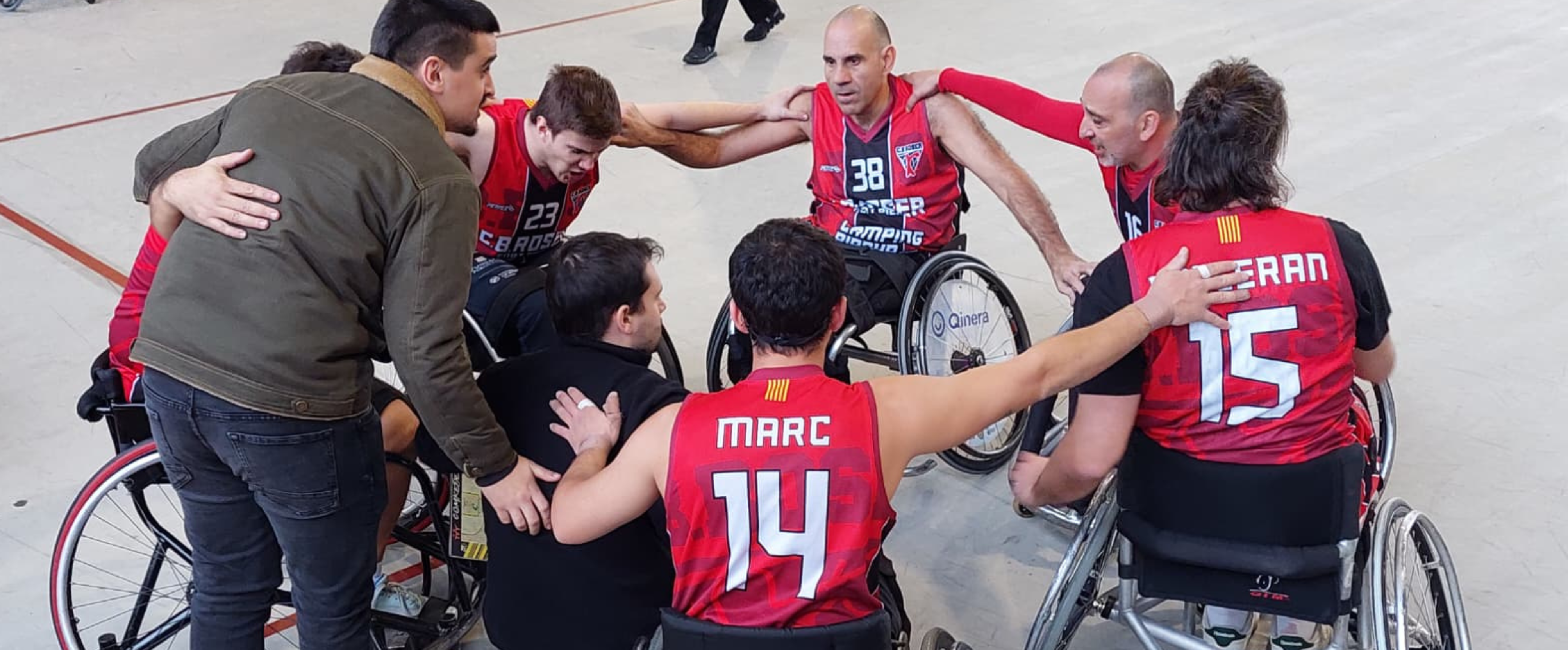
The severity of his injuries coupled with the treatment and surgery required forced David to put his life and sport, his greatest passion, on hold. Over a year later, David is back competing with his team, CB Roser, and has resumed the other sports he plays, always carefully and mindful of the importance of prevention to avoid another injury that might keep him off the court.
A victory shared with his medical team
"Motivation has been essential in getting me this far, and most importantly thinking about sport and wanting to get back to competing and living a normal life," commented David after winning one of the first wheelchair basketball matches he has played in since being discharged from hospital.
Watching from the stands are nurse Pere Coca and Dr Óscar Izquierdo, a consultant in the Orthopaedic Department at Hospital SJD Sant Boi, who treated and supported him for over a year until his full recovery. Both had promised to cheer him on from courtside when he was back to his best.
David’s mental strength has been pivotal throughout this whole process along with the confidence instilled in him by Coca and Izquierdo. “I told him: listen, I’ll do everything I can to try and get you better; we won't throw in the towel, we'll operate on you as many times as necessary. And once we’ve got you better, we’ll come and watch you play. And here we are," said Dr Izquierdo, delighted and proud to finally see him back on the court.
Teamwork to treat the most complex wounds
David Moreno’s case called for a joint approach involving advanced practice wound care nurses, orthopaedic surgeons specialising in microsurgery and reconstructive surgery, and the Home Hospitalisation team who over the course of more than a year coordinated interventions, clinical follow-up and advanced wound management. This combined effort, one of the hallmarks of the Complex Wounds Unit, has been crucial in enabling this patient to make a full recovery. “He came in with ulcers, both on the sacrum and in the ischial region, and surgery was necessary because the injury was so severe that the bones were already exposed,” points out Dr Izquierdo.
New innovative treatment harnessing regenerative medicine
As part of this holistic approach, David was the first patient at the SJD’s Complex Wounds Unit to be treated with Autologous Cytokine-Rich Serum (ACRS), an innovative regenerative medicine technique involving the injection of patient-derived ACRS to stimulate and accelerate skin healing. The first session took place in November 2024 in collaboration with Qrem Regenerative Technology.
David's wounds were pressure injuries caused by having to stay in the same position for hours on end and further exacerbated by the absence of preventive measures while doing sport. When these injuries occur in dependent people with reduced mobility, they develop in areas of the body where the bone constantly presses the skin against an external surface (hip, heels and sacrum).
The introduction of this technique has been a major breakthrough for the Complex Wound Unit and its patients. Its use shortens healing times, reduces associated pain and minimises the risk of infection, making for faster and safer recovery. To date, 10 patients have been treated using ACRS at Hospital SJD Sant Boi with encouraging results.
Prevention: the key to eliminating avoidable injuries
Pressure ulcers are often overlooked injuries with a high risk of complications; however, 95% of them can be prevented through health education and by taking effective preventive measures. Postural changes, using specialised pressure-relieving surfaces and foam supports together with the application of hyperoxygenated fatty acids to the pressure area are all key factors in preventing this type of injury.
The Complex Wounds Unit at Parc Sanitari SJD is accredited as an Excellent Unit by the National Group for Study and Advice in Pressure Injuries and Chronic Wounds (GNEAUPP). It delivers multidisciplinary care in conjunction with professionals from various specialities including Internal Medicine, Orthopaedics, Infectious Diseases, Vascular Surgery, Diagnostic Imaging and Dermatology. In 2025, it saw 764 patients who received 2,939 treatments.