

Resistant depression demands a paradigm shift with more precise diagnoses
Precision psychiatry, using neuroimaging techniques, allows for early detection and more effective treatments to fight against chronification.
The growing percentages of treatment-resistant depression (TRD) —between 35% and 37% of people with depression worldwide— highlight the limits of current care models and the need to move towards more precise and personalised medicine.
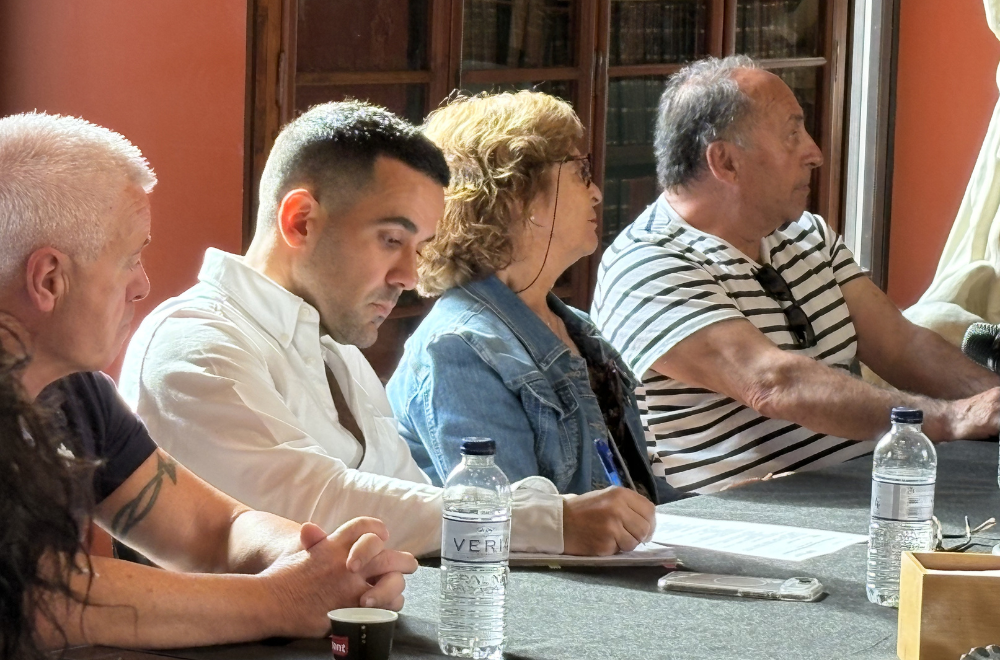
This is the main message to be drawn from the 3rd Conference on the Approach to Treatment-Resistant Depression, organised by Parc Sanitari Sant Joan de Déu with the aim of bringing the reality of this disorder closer to society through the direct experience of the people who live with it. Precisely with this intention, some testimonies who have suffered the consequences first-hand have joined Parc Sanitari SJD to promote a paradigm shift that they consider essential for more precise diagnoses and personalised interventions.
From 100 to zero in no time
The first-hand testimonies have shown the profound impact of resistant depression and the difficulty of finding an effective treatment.
Javier, a recovered patient, explains how he suddenly “lost the will to live” without an apparent reason, after years of an active life. His perception is that he went “from 100 to zero in no time”. After various unsuccessful treatments, he was diagnosed with depression and began a specialised approach that has allowed him to recover his life. Javier knows that the depression will return and says he is prepared to identify its symptoms and be able to make a quick intervention to achieve an effective result in less time.
On the other hand, Loli, the mother of a patient who has had depression for over twenty years, calls for precisely that: early diagnoses and specialised care from the outset: "If we had got there earlier, perhaps it would not have become chronic," she says. The “journey” her son went through until he was diagnosed is like a heavy burden in the face of the “helplessness” the caregiver feels when faced with such a devastating diagnosis. Both accounts coincide on the same idea: resistant depression is a long, complex process that is often misunderstood by society, and it requires an approach tailored to each person to reduce the waiting time until the expected effectiveness is achieved.
As many depressions as people
Expert professionals at Parc Sanitari Sant Joan de Déu insist that depression is not a homogeneous disease. It is a disorder that combines biological, psychological and social factors. “There are as many depressions as there are people,” they summarise. This complexity explains why treatments do not always work uniformly and require a comprehensive approach capable of intervening in all personal areas.
From trial and error to precision
Currently, the treatment of resistant depression is often based on trial and error processes of different treatments and approaches, guided by objective but also subjective clinical criteria. This model, as professionals point out, has clear limitations and can prolong the suffering of those affected.
Given this scenario, specialists propose a paradigm shift towards precision psychiatry, which allows for better adjustment of diagnoses, identification of the type of depression, and application of the most appropriate treatment from the outset. “It is not about changing all the parts of the car, but rather identifying exactly which one is failing and how to repair it, taking into account the experience of the driver (the person’s life) and the road they are driving on (the environment),” explains Parc Sanitari SJD psychiatrist, Salvatore Aguilar.
A comprehensive model with encouraging results
Parc Sanitari Sant Joan de Déu has developed a Treatment-Resistant Depression Unit with a comprehensive and personalised approach model, combining different advanced therapeutic options, according to each patient's profile, which seek to stimulate the brain's neuroplasticity and are applied in safe clinical settings under specialised supervision:
- Intranasal esketamine
Administered in controlled sessions, it acts quickly on brain circuits involved in depression. It is especially useful in cases where conventional antidepressant medications have failed. Patients receiving these treatments achieve the greatest neuroplasticity gains, especially when combined with psychotherapy. It has shown a positive response in 82% of patients. - Electroconvulsive therapy (ECT)
A technique with decades of scientific evidence, indicated for severe and resistant depression. Performed under anaesthesia and medical monitoring, with highly significant results in symptom reduction, between 85-90%. - Transcranial Magnetic Stimulation (TMS)
A non-invasive procedure that uses magnetic fields to stimulate specific areas of the brain related to mood. It allows for improvements without serious side effects and has shown a response of 35-40%. - Psychotherapy and comprehensive approach: nursing, psychology, social work and family support.
- Psychedelic treatments (clinical setting research)
In the experimental phase and under strict protocols, these treatments aim to unlock mental patterns and facilitate psychotherapy in patients with chronic depression. Some of the patients from the Resistant Disorders Unit are candidates to participate in this trial.
Since its launch (2025), it has treated 205 people, 190 of whom have improved or recovered. 80% of patients are discharged in under 12 months, with an average stay of six months. The results show a significant improvement in the quality of life for the people treated. Younger patients or those with a shorter duration of the illness tend to respond more quickly to treatment.
The treatment selection is a personalised process based on scientific evidence. The unit's professionals assess each patient's clinical characteristics and explain all possible scenarios, taking into account factors such as the presence of psychotic symptoms, motor retardation, comorbidities, and contraindications. It is a shared decision-making model, where the patient, with the support of their family, chooses their preferred option from the specialists' proposals, which range from least to most invasive: esketamine, Transcranial Magnetic Stimulation (TMS) and Electroconvulsive Therapy (ECT). This approach ensures treatment tailored to each case while respecting individual preferences.
Beyond the treatment: psychotherapy and continuity
Experts stress that biological treatments are not sufficient on their own. Recovery requires continuous psychotherapeutic work, follow-up after the intensive phase, and intervention in the social and family environment. Without this continuity, the risk of relapse is high.
Within the framework of the 3rd Conference on the Approach to Treatment-Resistant Depression, held today, professionals from various centres agreed that the future lies in gaining precision. The presentations highlighted the potential of treatments such as esketamine and neuromodulation, the need to adapt them according to each patient's profile, the key role of psychotherapy, and the importance of reconciling the brain and life experience. Everything points to a shared consensus: Current treatments are effective, but they can be even more precise if better diagnostic tools are available.
In this context, professionals point out the need to incorporate technologies such as neuroimaging into clinical practice. Having a better "picture" of the brain would make it possible to refine the diagnosis, identify the affected circuits and direct the treatment more directly. The goal is to move towards increasingly personalised treatment: a "tailor-made suit" for each person.
Professionals stress that the challenge is not only clinical, but also organisational. More continuity of care is needed, as well as reorganising resources and committing to innovation. "It is not just about having more tools, but using them with greater precision and adapting them better to each patient."
Find more information about depression on the Sant Joan de Déu SOM Salut Mental 360 portal.
View the press release sent to the media here.