

A pilot project in Baix Llobregat will drive the transformation of integrated social and healthcare
Parc Sanitari SJD, the Fundació Hospital Sant Joan de Déu de Martorell, primary care centres, intermediate care, mental health services and local councils are joining forces to improve health outcomes and people’s experience
The coordination and joint working model will be transformed to respond to the needs detected in the territory with more integrated, decisive and closer care
The proposal of the Baix Llobregat Nord – Sant Boi Integrated Healthcare Area (AIS) is the most highly rated experience of the 22 chosen by the Department of Health to roll out the project
In the hospital setting, the project plans to reduce waiting times, travel and increase home visits, among other improvements
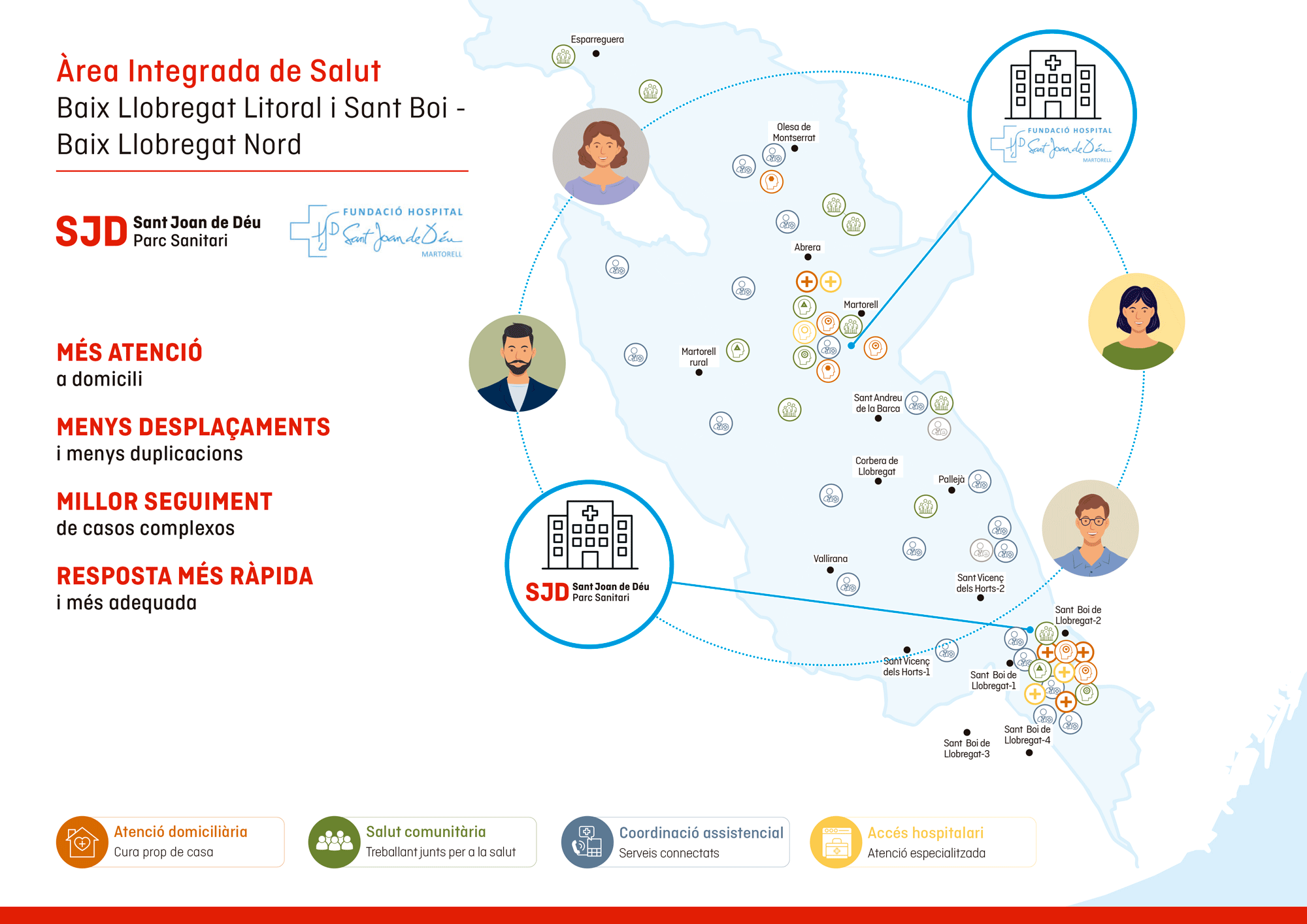
The bid of the Baix Llobregat Nord – Sant Boi Integrated Healthcare Area (AIS) has been chosen by the Department of Health as the best pilot experience and will be a pioneer in the launch of the new healthcare organisation model in Catalonia. This project, in which the Parc Sanitari SJD guarantees the continuum of care and access, quality, and equity of hospital services programmes in coordination with the Fundació Hospital Sant Joan de Déu de Martorell, proposes a change of model in care for citizens where co-responsibility between services and institutions is the basis of care. The integrated healthcare areas are a new way of organising health services to favour collaboration between local resources, with community health and primary care as the main focus, and also with the rest of the healthcare centres, social services, local administrations and community organisations.
“The Baix Llobregat Nord – Sant Boi AIS exemplifies the transformation we are promoting throughout Catalonia to adapt the healthcare system to current challenges,” highlighted the manager of the Southern Metropolitan Barcelona health region, Anna García-Altés. “The main value of this project is that it puts people at the centre and allows us to move towards more agile, closer care with better support throughout life. To achieve this, it is essential that health and social services and local administrations work as a single network serving the community,” she added
The Baix Llobregat Nord – Sant Boi AIS is one of the 30 AIS that will be created in Catalonia and comprises the catchment areas of the Martorell and Sant Boi hospitals, where some 340,000 people live. Its proposal is fully oriented towards the needs of the public and aims to improve cooperation between services, reduce fragmentation and break down any possible existing inequities. “The fact that it has been selected with a very positive assessment by the Department of Health is a recognition of the capacity for collaboration that already exists between professionals, healthcare institutions, social services and local councils in this territory,” added García-Altés.
The Baix Llobregat Nord-Sant Boi AIS proposal
This is one of the nine complete projects, which deploys proposals related to the four strategic programmes for the Department of Health: territorial community health; integrated home care; the continuum of care and the guarantee of access, quality, and equity of hospital services.
- In territorial community health, which is carried out collectively, taking into account the environment and the community, the model proposes deploying an integrated social and healthcare territorial corridor with the aim of connecting municipalities, resources, and best practices to act in an integrated manner.
- In the field of home care, the project focuses on strengthening care for people with complex chronicity, frailty, dependency, or advanced illness, with continuous care at home, through integrated care circuits between primary, hospital, intermediate care, and social services.
- Regarding the continuum of care, the follow-up in the care of a person over time and across different healthcare services, the proposal envisages the coordinated rollout of the programme, with the participation of primary care teams, the two reference hospitals, Hospital SJD Sant Boi and the Fundació Hospital Sant Joan de Déu de Martorell, and intermediate care.
- Finally, in the area of guaranteeing access, quality, and equity of hospital services, the bid places operational integration between the two reference hospitals as its central axis, with actions to improve accessibility and equity, reduce waiting lists, expand the portfolio of specialties, and be more decisive in the territory.
What will change for the public?
The proposed model translates into specific improvements in people's day-to-day lives, with more connected and decisive services:
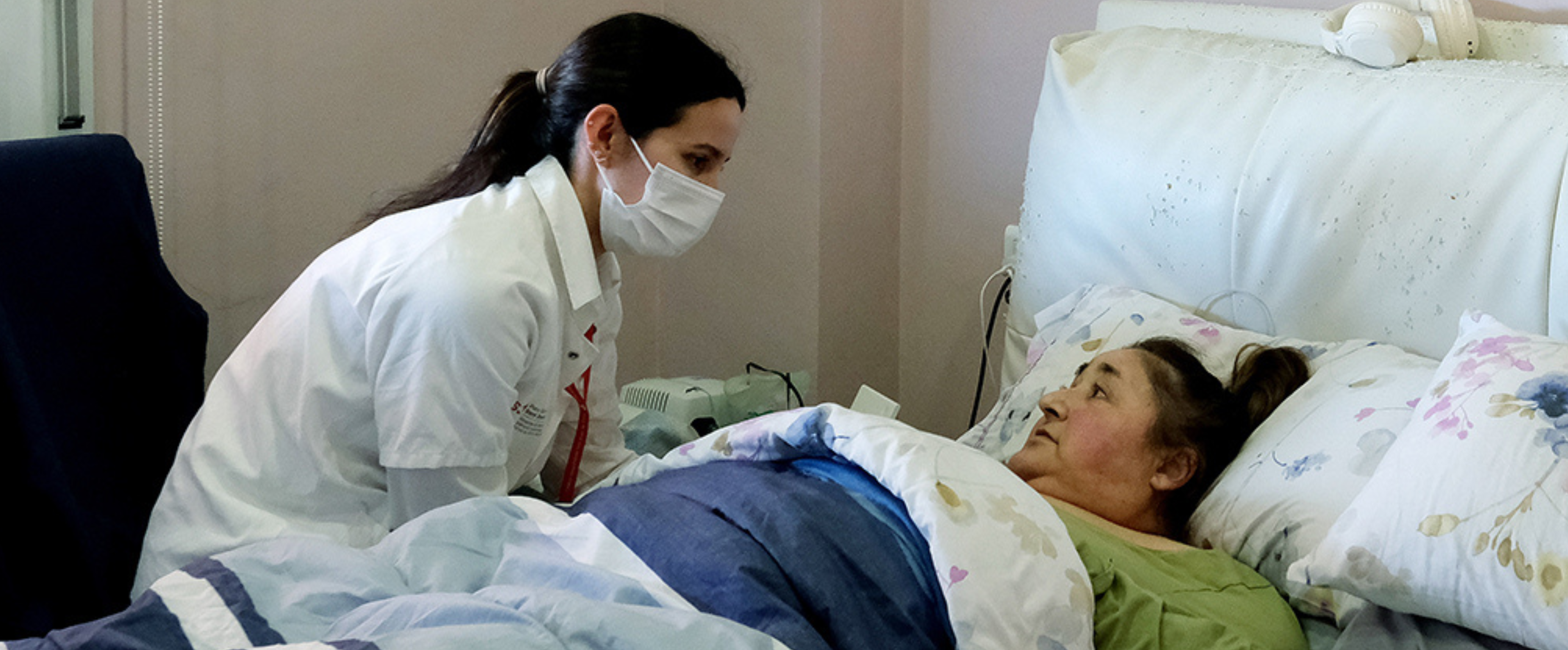
- More home care: the coordinated work with the different local councils will allow elderly people or those with chronic illnesses to be cared for at home by coordinated teams, avoiding unnecessary admissions.
- Fewer journeys and less duplication: the services will share information and coordinate visits, avoiding repeated tests and unnecessary journeys outside the territory.
- Better follow-up of complex cases: social and healthcare integration will make it possible to define clearer circuits, single therapeutic plans, and assign reference professionals for each person.
- Faster and more appropriate response: every need will be resolved at the most appropriate care level, at the most opportune time and place, and with the most suitable team.
"Thanks to the new AIS, an elderly person with multiple illnesses will be able to be cared for at home by an integrated social and healthcare team, made up of primary care, hospital, and social services professionals from the corresponding local council," predicts Dr Luis Lores, director of Hospital SJD Sant Boi.
More services, more capacity, and better coordination to care for 340,000 people
Specifically, at Hospital SJD Sant Boi the proposal will translate into the expansion of the portfolio of services through the incorporation of new specialties; an increase in the resolution of complex cases; and the strategic alliance with the Fundació Hospital Sant Joan de Déu de Martorell to improve territorial equity. "The proposed model represents a step forward at all levels, both in the purely healthcare field and in patient care, and positions us as a key piece to guarantee more equitable, closer, and higher-quality care for the public," states Dr Luis Lores.
The project does not start from scratch. In coordination with primary care, initiatives that anticipate this model are already being developed, such as the 7x24 home care programmes, case management, and coordination experiences between centres, such as the Diagnostic Imaging Service.
The new territory will provide coverage to 340,000 people, with diverse realities and social and health inequalities, which will require integrated responses adapted to each municipality.
22 integrated healthcare areas launch the new map of the healthcare system
Last February, the Department of Health defined a new map of the healthcare system in Catalonia, made up of 30 AIS, which follows the model being developed in Europe and aims to adapt the system to current challenges: ageing, chronicity, and social inequalities.
Up to a total of 22 areas have presented new community health, home care, and hospital service collaboration projects with the aim of advancing the development of the new healthcare system map of Catalonia, which follows the model being developed in Europe, and which aims to adapt the system to current needs: ageing, chronicity, and social inequalities. According to the Department of Health, the providers of the 22 AIS that have presented projects provide coverage to almost 80% of the population of Catalonia.
New formulas for governance, professional organisation, funding and evaluation of health outcomes will be implemented for the rollout.